DEPARTMENT OF SCIENCE & HUMANITIES (FIRST YEAR ENGINEERING)
About Department
Greetings, Students
Greetings from the First Year Engineering Department! We want to reassure you that you are joining a thriving and encouraging community that is committed to your success as you set out on this life-changing opportunity.
During the first year, you will learn how to think critically and solve problems while exploring basic ideas from various engineering fields. Our curriculum is intended to stimulate your creativity and curiosity and challenge you. Benefit from the practical projects and lab experiences that will make your education more interesting. We urge you to get involved and interact with your peers, and look for mentorship opportunities. Recall that, engineering is a collaborative field, and establishing relationships will enhance your academic career.
Our faculty and staff are here to support you every step of the way. Don’t hesitate to reach out for guidance, whether it’s academic advice or career planning. Embrace this year with an open mind, and take every opportunity to learn and grow. We are excited to see, how you will contribute to the engineering field and the innovations of tomorrow!
Best wishes for a successful and fulfilling year ahead!
Highlights
- Curriculum Overview
- Introduction to core engineering principles: Physics, Mathematics, Chemistry, and Communication Skills.
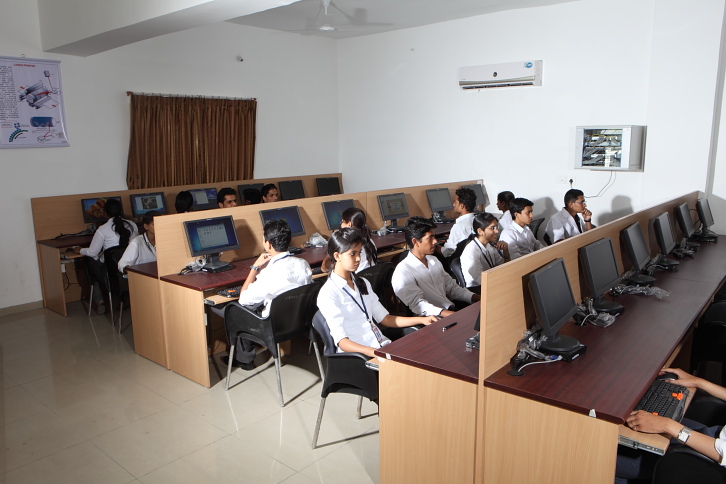
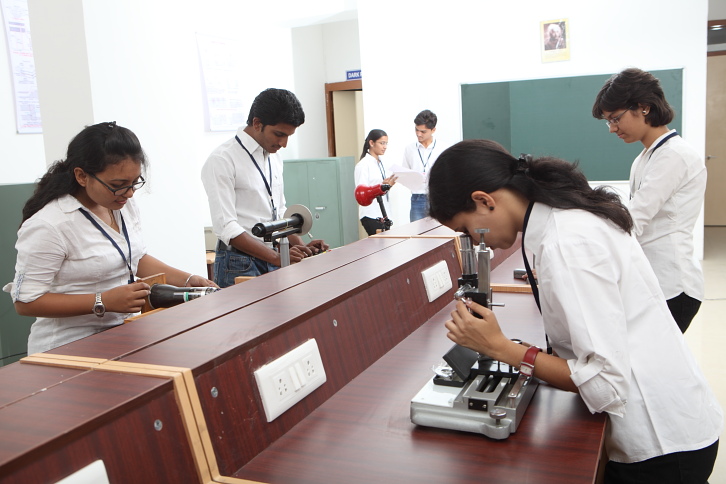
- Hands-on laboratory sessions to reinforce theoretical knowledge.
- Interdisciplinary courses that encourage collaboration across engineering fields.
- Student Support
- Mentorship programs pairing for first-year students with slow and advanced learners.
- Academic advising to help students navigate course selections and career paths.
- Workshops on study skills, time management, stress management and exam preparation.
- Projects and Labs
- Emphasis on team-based projects to develop problem-solving and collaboration skills.
- Access to state-of-the-art labs and equipment for practical experience through Engineering Exploration.
- Opportunities to participate in design challenges and competitions like BAJA, TIFFAN, and Avishkar competitions.
- Extra Curricular Activities
- Engineering clubs and organizations that focus on various disciplines (e.g., robotics, environmental engineering).
- Guest lectures and seminars by industry professionals.
- Demo session on Fire safety and disaster management, Food awareness.
- Networking events to connect students with potential employers.
Program Outcomes (PO’S)
Graduates will be able to :
- PO1: Engineering knowledge: Apply knowledge of mathematics, natural science, computing, engineering fundamentals and an engineering specialization as specified in WK1 to K4 respectively to develop the solution of complex engineering problems. .
- PO2: Problem analysis: : Identify, formulate, review research literature and analyze complex engineering problems reaching substantiated conclusions with consideration for sustainable development. (WK1 to WK4)
- PO3: Design/development of solutions: : Design creative solutions for complex engineering problems and design/develop systems/components/processes to meet identified needs with consideration for the public health and safety, whole-life cost, net zero carbon, culture, society and environment as required. (WK5).
- PO4: Conduct investigations of complex problems: Conduct investigations of complex engineering problems using research based knowledge including design of experiments, modelling, analysis & interpretation of data to provide valid conclusions. (WK8).
- PO5: Engineering tool usage: Create, select and apply appropriate techniques, resources and modern engineering & IT tools, including prediction and modelling recognizing their limitations to solve complex engineering problems. (WK2 and WK6)
- PO6: The engineer and Thew World: Analyze and evaluate societal and environmental aspects while solving complex engineering problems for its impact on sustainability with reference to economy, health, safety, legal framework, culture and environment. (WK1, WK5, and WK7).
- PO7: Ethics: Apply ethical principles and commit to professional ethics, human values, diversity and inclusion; adhere to national & international laws. (WK9)
- PO8: Individual and Collaborative work: Function effectively as an individual, and as a member or leader in diverse/multi disciplinary teams.
- PO9: Communication: Communicate effectively and inclusively within the engineering community and society at large, such as being able to comprehend and write effective reports and design documentation, make effective presentations considering cultural, language, and learning differences.
- PO10: Project management and Finance: Apply knowledge and understanding of engineering management principles and economic decision-making and apply these to one’s own work, as a member and leader in a team, and to manage projects and in multidisciplinary environments.
- PO11: Life-long learning: : Recognize the need for, and have the preparation and ability for i) independent and life-long learning ii) adaptability to new and emerging technologies and iii) critical
HoD Message
Dr. Satyawan L. Dhondge
Welcome to the Department of First Year Engineering at CSMSS Chh. Shahu College of Engineering, Chhatrapati Sambhajinagar.
It is a great honour to serve as the Head of Department for our first-year students, guiding bright young minds across Computer Science & Engineering, Artificial Intelligence & Data Science, Mechanical Engineering, Electronics & Computer Engineering, Electronics Engineering (VLSI & Technology), Electronics & Communication (Advanced Communication Technology), Civil Engineering and Electrical Engineering. Our department represents the foundation of engineering education, where students are introduced to core concepts, practical skills, and innovative thinking that will shape their future professional careers.
The first year of engineering is a crucial phase in every student’s journey. It lays the groundwork for advanced studies and provides exposure to multidisciplinary concepts, critical problem-solving skills, and hands-on learning experiences. Our curriculum is carefully designed to balance theoretical knowledge, laboratory experiments, and project-based learning, ensuring students develop a solid understanding of engineering fundamentals while cultivating creativity, analytical thinking, and teamwork.
Beyond academics, we focus on holistic development. Students are encouraged to participate in workshops, seminars, technical events, and extra-curricular activities to enhance leadership, communication, and organizational skills. Our experienced faculty members are committed to mentoring students, addressing individual learning needs, and motivating them to strive for excellence in all areas.
As the HOD, my vision is to create a nurturing and intellectually stimulating environment where students not only achieve academic success but also grow as responsible, innovative, and ethical engineers ready to contribute to society. I invite all first-year students to take full advantage of the opportunities, resources, and guidance available here and embark on their engineering journey with enthusiasm and curiosity.
Together, we aim to build a strong foundation for a future of innovation, knowledge, and professional excellence
Course Offered (B.Tech)
| UG Courses |
Intake |
Durations |
| Computer Science & Engineering |
180 |
4 Years |
| Artificial Intelligence and Data Science |
180 |
4 Years |
| Electronics and Communication engineering (Advanced Communication Technology) |
60 |
4 Years |
| Civil Engineering |
60 |
4 Years |
| Electrical Engineering |
60 |
4 Years |
| Electronics and Computer Engineering |
120 |
4 Years |
| Mechanical Engineering |
120 |
4 Years |
| Electronics Engineering (VLSI Design and Technology) |
60 |
4 Years |
Laboratories
The department has following laboratories.
Laboratory Name
- Engineering Physics Laboratory
- Engineering Chemistry Laboratory
- Engineering Mechanics Laboratory
- Engineering Communication Skills Laboratory
For More Laboratory Details :
Click Here
University Syllabus